

KEY TAKEAWAYS
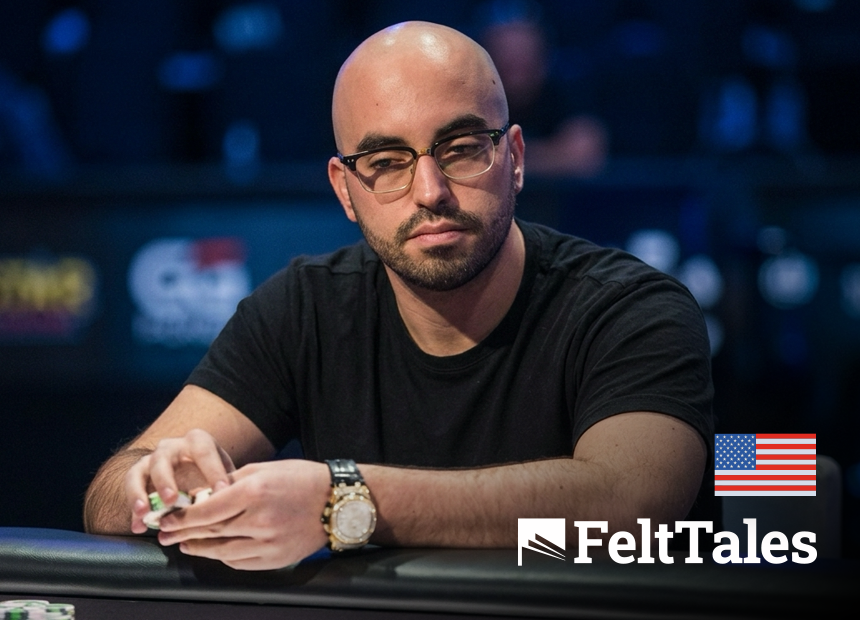
Bryn Kenney, the player The Hendon Mob lists at the top of poker’s all-time live tournament money list, sat down for a wide-ranging conversation on the Not A Damn Chance! podcast, published on YouTube on November 25, 2025. Over roughly 70 minutes, Kenney spoke with hosts Phillip Frankland Lee and Neen Williams about his start in Magic: The Gathering, how he found poker, and the years in which he said he won and lost seven-figure bankrolls before committing to tournaments. The conversation is less a strategy lesson than a story about money, risk and recovery. This article summarizes what he said, adds verified context, and links to the exact moments in the original video, which belongs to the podcast’s team.
Where Kenney Said It
The interview is episode 28 of Not A Damn Chance!, a podcast published by YMH Studios and hosted by pro skateboarder Neen Williams and Michelin-starred chef Phillip Frankland Lee. The show describes itself as a series of conversations with people who have faced serious adversity and refused to quit. The video runs 69 minutes and 52 seconds, and Kenney does most of the talking.
Video: Not A Damn Chance! Podcast Ep. 28 — Not A Damn Chance! Podcast (YMH Studios), published November 25, 2025.
From Magic: The Gathering to Poker
Kenney traced his poker mind back to early childhood. He said his parents showed him baseball cards when he was about a year and a half old and that he memorized the names and positions of roughly 50 of them, which he credits for a strong memory.
Magic: The Gathering came next. Kenney said he played from about age 13 to 16 and was the number one player in the world in the 15-and-under division. PokerNews reported in 2019 that he held that ranking by age 14.
Poker filled the gap. Kenney said he started around 15 or 16 with $20 games in his grandfather’s backyard, and that many Magic players were moving into poker at the time. He recalled a Magic player finishing second in the World Series of Poker Main Event, naming David Williams, though he was unsure of the year. WSOP records show Williams finished second to Greg Raymer in the 2004 Main Event, earning $3.5 million in a field of 2,576 entries, during what is often called the poker boom. After high school, he said, he played on PokerStars 10 to 12 hours a day.
Two Bankrolls Won and Lost
The first big run came at Commerce Casino. Kenney said that around age 20 he went to the PokerStars tournament in the Bahamas with a small bankroll, lost what he had, and was invited to Los Angeles by someone who offered to stake him. Afterward, he said, he took about $20,000 into the cash games at Commerce and ran it up to roughly $1.1 million in a month to a month and a half, including a streak he put at 30 or 35 winning days.
He then lost that bankroll away from the tables. Kenney said he let the person who had brought him to Los Angeles use part of his money under a deal in which the other person would repay half of any losses, and that when the money was gone the repayment never came. He described it as how he lost his first million-dollar bankroll.
The second cycle was bigger. Kenney said he later turned $50,000 into about $3.5 million in roughly two months playing heads-up Pot-Limit Omaha, mostly on Full Tilt. He said he then started staking others in live tournaments and lost the entire amount in about six months, ending up owing friends somewhere near $500,000.
He framed the low point through a movie. Kenney said his favorite childhood film was Gladiator. He said: “I kind of always equated myself as like a gladiator in the arena.”
The way back started with the smallest games. When his borrowing power felt exhausted, Kenney said, a switch went off and he began playing tournaments, going from heads-up $100,000 buy-ins to $20 events within about six months. He said he refused to spiral because giving up on himself would mean giving up on his family and friends, and that rebuilding to a million dollars took six to nine months while he repaid the people he owed.
Why Staking Was His Biggest Vice
Kenney called staking his worst vice by far. He explained that a backer typically buys a player into events, recoups what the player is down, and then splits the winnings 50/50. In his telling, that leaves the backer absorbing all of the losses but only half of the wins.
He blamed his own assumptions as much as the format. Kenney said he thought poker was easy to win, so he expected the people he backed to win too, but many already believed they knew the game.
Today, Kenney said, almost nobody stakes anyone. Instead, players sell pieces of their action at a markup. His example: if an investor believes a player has a 6 percent return on investment in a $100,000 event, the investor might pay $10,300 for 10 percent of the action, which is $10,000 of buy-in. These figures are his own and were not independently audited.
Strategy, Money and the Long Game
Kenney rejected the idea that poker is a solved game. He argued that memorizing solutions instead of solving problems leaves players without tools when a new spot arrives, and said online players used to information often struggle live, where there is none.
He also described a particular relationship with money. Kenney said that to get very good at poker you cannot put a value on money in the moment, and that this habit seeps into life. He now plays mostly tournaments, he said, because strong players are often unwelcome in private cash games.
Kenney said his schedule is lighter now. He plays four or five stops a year and acknowledged he may be a step behind on some current ideas, but said his base of experience still lets him compete. He put his total play at about 100,000 hours, saying: “I played poker like a 100,000 hours or something.”
Key Moments From the Interview
Why It Matters
The interview shows the other half of a famous ledger. As of October 2026, The Hendon Mob lists Kenney first on its all-time money list with $90,849,206 in live tournament earnings, a total that counts live tournaments only, not cash games or online play. Against that record, Kenney describes a path in which two seven-figure bankrolls disappeared before he committed to tournaments.
It is also a reminder of how far poker results can swing. Big wins are the exception, variance is real, and poker is not a reliable source of income for most people.
The account is one-sided by nature. The figures, the staking arrangements and the timelines come from Kenney’s own recollection, and FeltTales has not independently verified them.
Frequently Asked Questions
Sources & References
- Not A Damn Chance! Podcast — The Mindset That Made Me the #1 Poker Player in the World | NADC! w/ Bryn Kenney (YouTube, November 25, 2025)
- The Hendon Mob — Bryn Kenney player profile
- WSOP.com — 2004 World Series of Poker, Event #33 Main Event results
- PokerNews — Before the Game: Bryn Kenney the Magic Player (Part One)
- YMH Studios — Not A Damn Chance!