

KEY TAKEAWAYS
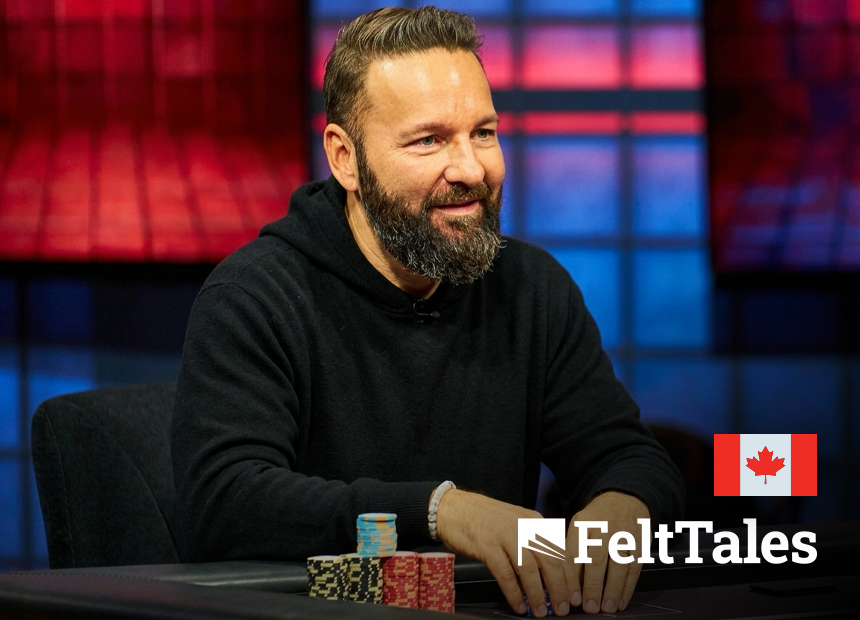
Daniel Negreanu returned to the PokerNews Podcast in September 2026 with plenty to say. In episode #1,007, hosted by Chad Holloway and Mike Holtz, the Poker Hall of Famer took aim at the new Hall of Fame voting format, explained exactly how he would replace it, and made a strong case for slide dealing becoming the standard at every poker table. He also defended live, read-based poker against solver-driven play, broke down a much-discussed hand from Hustler Casino Live, praised 2026 WSOP Main Event champion Lucas Jumalon and laid out his plans for WSOP Paradise in the Bahamas. Coming less than three months after he won his eighth WSOP bracelet, the conversation offers a clear look at where one of poker’s most visible voices stands on the issues players are arguing about right now. Here is what he said, and the context behind it.
Where Negreanu Said It
The conversation aired as episode #1,007 of the PokerNews Podcast, published on the PokerNews YouTube channel on September 17, 2026, and running about 34 minutes. Holloway and Holtz worked through a list of topics that ranged from Negreanu’s family news (he told them a baby boy was on the way) to the WSOP Super Circuit in Montreal, the Player of the Year race, the Hall of Fame and his favorite players of all time. A short segment near the end was a sponsor promotion; it is not covered here.
Video: PokerNews Podcast #1,007 — PokerNews, published September 17, 2026.
His Fix for the Poker Hall of Fame Vote
The 2026 Poker Hall of Fame used a new format designed to admit more players. Each of the Hall’s 33 living members could cast up to four votes, and any of the eight finalists who reached 22 votes would be inducted, a change that made as many as six inductees possible in theory. In practice, Jason Koon was the only player to clear the threshold, earning induction in his first year of eligibility. The other finalists included Shaun Deeb, Isaac Haxton, Justin Bonomo, Scott Seiver and Isai Scheinberg.
Negreanu called the outcome really unfortunate and said the system simply failed, since the plan had been to open the doors to more people. He said he had proposed a different method to the organizers, which they chose not to use. He also took issue with the two-thirds requirement, pointing out that if a group of members did not vote at all, nobody would get in.
His alternative is a ranked ballot with guaranteed inductees. Each voter would pick three of the eight nominees and rank them: five points for first, three for second and two for third. The two highest point-getters would go in every year, and a third nominee would join them if he or she passed a set threshold, which Negreanu loosely placed somewhere around 40 or 50 points. He argued this would clear the backlog of deserving candidates, naming Scheinberg and Seiver as players who seemed like strong choices this year.
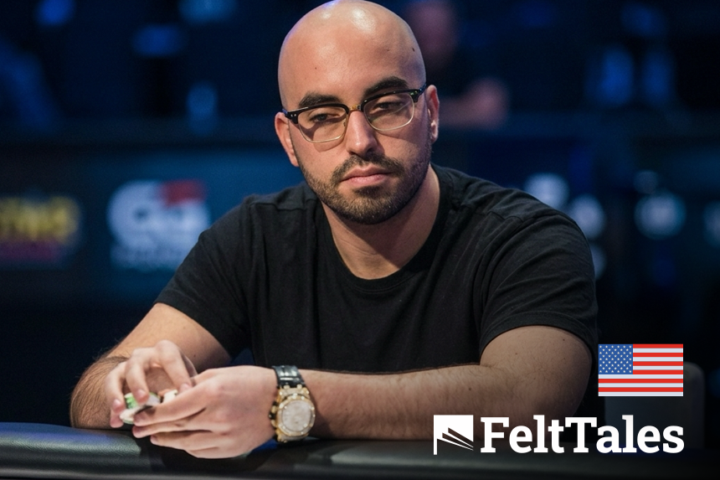
Asked about his earlier idea of regularly adding an industry figure, Negreanu said he has moved away from that proposal, because a better system that admits more people each year would take care of the backlog by itself. He also singled out Bryn Kenney as someone he considers Hall of Fame worthy, recalling a $50,000 No-Limit Hold’em final table they played together where, by his account, Kenney made two remarkably aggressive plays.
Why He Backs Slide Dealing
Slide dealing means the dealer slides each card face down across the felt rather than pitching it through the air. Holtz has been one of the method’s loudest supporters on the show, and Negreanu sided with him firmly. Joking first that the only people who would dislike the change are cheaters, he said, “it’s a no-brainer for it. It just makes all the sense in the world.”
His reasoning was practical: a card that never leaves the table is never visible, which he said would mean fewer flashed cards, fewer misdeals and fewer strange situations, such as cards caught by air from a venue’s ventilation. Negreanu said he hates it when a card flips, describing a couple of painful hands over the years where a flashed card changed what happened next. He added that he thinks slide dealing could be easier for many dealers, and recalled that the first time he saw it in Europe he thought it was much better and also faster.
When Holtz said the dealers he met on a recent livestream did not like the idea, Negreanu suggested grandfathering in current dealers and training new dealers to slide. For readers curious about the people behind the cards, FeltTales has a look at the dealers and floor staff who run the WSOP.
Solvers, Live Reads and the Señor Tilt Hand
Negreanu admitted he had long avoided Hustler Casino Live, saying cash-game livestreams are not his genre as a tournament player. He finally went, and said he wished he had postponed his flight home because he enjoyed it so much, describing the game as relaxed and full of action. He suggested that part of the format’s appeal is that it is live: viewers want to feel part of the moment rather than watch a replay. Poker has a long history of finding new ways onto screens, as FeltTales explored in its piece on how the hole-card camera turned poker into TV.
The hosts asked about his widely discussed pot against Señor Tilt. Negreanu explained that very deep stacks change how he values a hand like ace-queen offsuit, which he said plays poorly after the flop in multi-way pots, so he preferred to limp and call rather than build a big pot preflop against players he considered sticky. He also revealed that he had misread his opponent on the river, believing him weaker than he was, which is why he chose to check-raise as a bluff. He credited Señor Tilt for a good breakdown of the hand in his own video.
From there Negreanu made his broader point: live poker rewards players who shift their ranges in ways opponents cannot see. He said people who follow solver lines too closely can be fooled until they figure out what you are doing, and then you switch again. He named Bryn Kenney, Jesse Lonis and Adrian Mateos as top players who, in his view, play their own game rather than act as slaves to software outputs, pointed to Alex Foxen as someone steeped in theory who is still relentlessly aggressive at the table, and said it matters for poker when players like them win.
WSOP Paradise and the Player of the Year Race
WSOP Paradise runs from December 2 to 17, 2026, at Baha Mar in the Bahamas, with 20 bracelet events, and the WSOP has said the 2026 Player of the Year race will be decided there. Negreanu confirmed he will attend and said he expects to win at least one of the Pot-Limit Omaha events. He said a win is essential to his chances, and that if he were betting he would back Alex Foxen, whom he described as the favorite given his points total. As of October 21, 2026, the WSOP leaderboard showed Shaun Deeb first with 3,410 points, Foxen third with 3,381 and Negreanu sixth with 2,698.
Negreanu already has a winning 2026 behind him: on July 2 he won the $100,000 Pot-Limit Omaha High Roller at the WSOP for $2,257,718 and his eighth bracelet. Results like that are rare even for elite players, and tournament poker remains a game of heavy variance.
He was full of praise for 2026 Main Event champion Lucas Jumalon, the 22-year-old from Spokane, Washington, who beat a field of 9,208 entries and Lauri Saaskilahti heads-up to win $10,000,000. Negreanu called him a breath of fresh air, mature and respectful, and said Jumalon adapted to each opponent instead of playing by theory alone. He also defended fellow Canadian Greg Mueller, who finished third, saying Mueller drew criticism for folding a lot but was right to play to make as much money as he could.
Key Moments From the Interview
Why It Matters
Negreanu has pushed for Hall of Fame reform for years, discussing changes he wanted on this same podcast back in 2023, and the 2026 result gave his argument fresh weight: a format that could have admitted several players still produced a single inductee. His ranked-ballot plan trades the possibility of a large class for a guaranteed minimum of two, a direct answer to the backlog problem. Supporters of the current approach could argue that a high bar protects the honor, and the Hall’s own criteria still require nominees to be at least 40 and to have stood the test of time.
On slide dealing, his support adds a high-profile voice to a debate usually led by grinders like Holtz, though the dealer reluctance raised on the show is a real obstacle to any quick change. And his defense of read-based play is consistent with the player he has always been, which shows in his all-time list. Asked for his top five, he stopped at four: Doyle Brunson, Phil Ivey, Stu Ungar and Chip Reese. Readers can revisit Doyle Brunson’s career and legacy and Stu Ungar’s 1997 WSOP comeback.
Frequently Asked Questions
Sources & References
- PokerNews — The One Interview with Daniel Negreanu You Don’t Want to Miss | PokerNews Podcast #1,007 (YouTube, September 17, 2026)
- WSOP — Jason Koon Inducted Into the Poker Hall of Fame
- Poker.org — Jason Koon Is Sole 2026 Poker Hall of Fame Inductee Despite Voting Overhaul
- WSOP — Daniel Negreanu Wins PLO High Roller and 8th WSOP Bracelet
- WSOP — 22-Year-Old Lucas Jumalon Wins the 2026 World Series of Poker Main Event
- WSOP — WSOP Unveils Paradise 2026 Schedule and Early Bird Packages
- WSOP — 2026 WSOP Player of the Year Leaderboard
- PokerNews — GGPoker Ambassador Daniel Negreanu Talks 2023 WSOP & Poker Hall of Fame