


KEY TAKEAWAYS
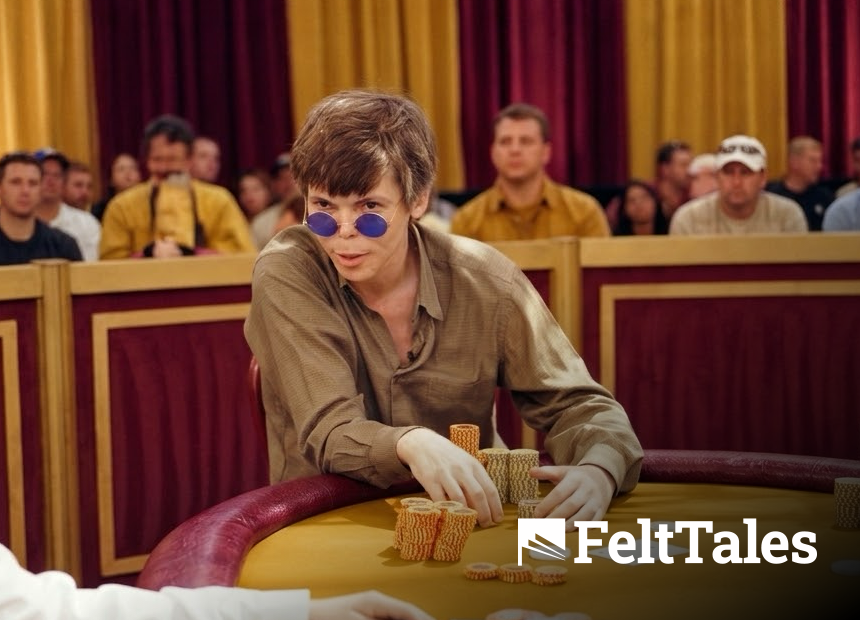
Stu Ungar is the player most often named when poker people argue about natural talent. Born in Manhattan on September 8, 1953, according to his WSOP player profile, he won the World Series of Poker Main Event in 1980, 1981 and 1997, one of only two players to win it three times. He collected five WSOP bracelets, won Amarillo Slim’s Super Bowl of Poker three times, and was considered, by himself and by fellow professionals such as Mike Sexton, an even better gin rummy player than poker player.
His career was also defined by what he lost. Ungar won millions and kept little of it, struggled with cocaine addiction for many years, and died in a Las Vegas motel room in November 1998 at the age of 45. Nicknamed “The Kid” for his youthful looks, he was inducted into the Poker Hall of Fame in 2001. This profile covers who Stu Ungar was, what the record books show he achieved, how his talent was described by the people around him, and the parts of his story that are often told wrong.
From Gin Rummy Prodigy to Las Vegas
Ungar grew up on Manhattan’s Lower East Side, where, according to the WSOP, his father ran a social club that doubled as a gambling establishment. The Las Vegas Sun described his father as a bookmaker who managed a bar. Gambling was part of his world from childhood, and gin rummy was his first game, PokerNews notes.
After his father died in 1967, PokerNews reports, Ungar left school to play gin and help support his family. The Independent’s 1998 obituary adds that his mother suffered a stroke a year after his father’s death. By the time he was a young adult, he had a reputation as one of the best gin players in New York. PokerNews records that he once beat gin player Harry “Yonkie” Stein 86 games in a row, and the WSOP says his dominance became so complete that the competition dried up.
That shortage of opponents pushed him west. PokerNews says he first visited Las Vegas in 1977 to play gin. The Las Vegas Sun reported that his card-counting skills quickly got him banned from blackjack tables in town, and that this was when he turned to no-limit Texas hold’em. In a Card Player column, Mike Sexton recalled meeting him in 1978 as a fast-talking whiz kid out of New York who played anyone for any amount of money.
Stu Ungar’s Poker Career: Titles and Results
Ungar’s first Texas hold’em tournament was the 1980 WSOP Main Event, according to the WSOP. The field had grown to 73 players, PokerNews notes, and Ungar beat Doyle Brunson heads-up for a first prize of $365,000. PokerNews describes the heads-up match as lasting about 15 minutes, ending when Ungar turned a straight after Brunson had flopped two pair. The WSOP records that Brunson commented it was the first time he had seen a player improve so quickly over the course of a tournament.
Back-to-back champion
In 1981, Ungar defended the title, beating Perry Green heads-up for $375,000, PokerNews reports. That made him one of only four players to win consecutive Main Events, along with Johnny Moss, Doyle Brunson and Johnny Chan, according to the WSOP. The same year he won the $10,000 Deuce to Seven Draw event for $95,000, and in 1983 he took the $5,000 Seven Card Stud event for $110,000.
Beyond the World Series
Away from the WSOP, Ungar won the main event of Amarillo Slim’s Super Bowl of Poker three times. Sexton wrote that Ungar was the only player to win both the WSOP Main Event and the Super Bowl of Poker, and that he won each three times. PokerNews lists those Super Bowl wins as 1984, 1988 and 1989, while the Las Vegas Sun’s 1998 obituary gave 1983, 1988 and 1989. The WSOP’s own 2009 tribute credits him with ten championship no-limit hold’em events with buy-ins of $5,000 or more, out of about thirty he entered.
The 1997 comeback
By the late 1990s Ungar was broke and visibly ill. The WSOP’s history of the series says fellow Hall of Famer Billy Baxter loaned him the $10,000 to enter the 1997 Main Event, while PokerNews describes Baxter as staking him. Ungar reached the final table with more than a third of the chips and beat John Strzemp heads-up to win $1,000,000, the largest cash of his career, from a field of 312 players. “That was by far my greatest performance ever,” he said afterward, as quoted by the Las Vegas Sun. The full story of that run is told in FeltTales’ account of Stu Ungar’s 1997 WSOP comeback.
The table below lists his WSOP wins and his one other Main Event final table, using figures from the WSOP and PokerNews.
| Year | WSOP event | Finish | Prize |
|---|---|---|---|
| 1980 | $10,000 No-Limit Hold’em Main Event | 1st | $365,000 |
| 1981 | $10,000 Deuce to Seven Draw | 1st | $95,000 |
| 1981 | $10,000 No-Limit Hold’em Main Event | 1st | $375,000 |
| 1983 | $5,000 Limit Seven Card Stud | 1st | $110,000 |
| 1990 | $10,000 No-Limit Hold’em Main Event | 9th | $25,050 |
| 1997 | $10,000 No-Limit Hold’em Main Event | 1st | $1,000,000 |
Across his career the WSOP credits him with $2,081,478 in WSOP earnings, which the Las Vegas Sun reported in 1998 was second on the series’ all-time money list at the time.
Why Stu Ungar’s Legacy Endures
Ungar’s reputation rests on results and on testimony from the players who faced him. The WSOP’s profile says many consider him the greatest poker player of all time, and Sexton wrote in Card Player that he counted himself among them. Sexton pointed to Ungar’s ten major no-limit titles and noted that the next players in line at the time, T.J. Cloutier and Johnny Chan, had won half as many.
He was also remembered for an unusual mind. The WSOP describes him as a prodigy rumored to have a genius IQ and a photographic memory, and PokerNews credits his talent and powers of recall for his success at poker, blackjack and gin. He believed gin was his best game; PokerNews quotes him: “Some day, I suppose it’s possible for someone to be a better no limit hold ’em player than me. I doubt it, but it could happen. But, I swear to you, I don’t see how anyone could ever play gin better than me.”
As of ESPN’s 2026 list of champions, his three Main Event titles remain a shared record with Johnny Moss, and no one has won the event back-to-back since Johnny Chan in 1988. His life also became the subject of the film High Roller: The Stu Ungar Story, as PokerNews notes.
Addiction, Debts and the Cost of the Game
Ungar’s story is also one of the clearest warnings poker has. PokerNews says he often lost his winnings betting on sports and horses or on drugs, and the Las Vegas Sun reported that he was broke again two months after the 1997 win. He had discussed his cocaine addiction publicly shortly before his death, telling Icon magazine, as quoted by the Las Vegas Sun, that he believed it had taken years off his life.
The addiction cost him at the table too. In the 1990 Main Event, PokerNews reports, he was the chip leader with about 25 players left when he suffered a cocaine overdose in his hotel room and could not return; his stack was so large that he was blinded down to ninth place and still cashed for $25,050. In 1998, the Las Vegas Sun reported, he was too ill to defend his title.
On November 22, 1998, he was found dead in a room at the Oasis Motel on Las Vegas Boulevard, with about $800 in his pocket, according to The New York Times and the Las Vegas Sun. Police reported no sign of foul play. PokerNews states that he died of a heart condition brought on by years of drug abuse. He was 45.
Common Myths About Stu Ungar
Myth: Ungar won every Main Event he played. He did not. His 1990 Main Event ended in ninth place after his overdose, as both the WSOP’s results and PokerNews record.
Myth: His third title came in 1987. The Independent’s 1998 obituary said so, but the WSOP’s results show the third win was in 1997, from a field of 312.
Myth: He is still the youngest Main Event champion. He was the youngest when he won in 1980, but the Las Vegas Sun noted in 1998 that the record had already been broken. Even his age at that first win is reported differently: the Sun said 27, while The Independent said 26.
Myth: Being the greatest player of all time is an established fact. It is a widely held opinion, voiced by the WSOP and by contemporaries such as Mike Sexton, not a measurable title.
Related Stories
Ungar’s first Main Event win came against Doyle Brunson, profiled in his career and legacy, and Johnny Chan, the last player to go back-to-back, is covered in his poker career and bracelets. To see how far the Main Event grew after Ungar’s era, read about the 2003 win that started the poker boom.
Frequently Asked Questions
Sources & References
- WSOP.com — Stu Ungar player profile
- WSOP.com — #3: Stu Ungar
- PokerNews — Stu Ungar player profile
- Card Player — Stu Ungar: Welcome to the Hall of Fame, Part I (Mike Sexton)
- Las Vegas Sun — Famed gambler Ungar dies at 45
- Las Vegas Sun — Professional poker player Stu Ungar found dead in hotel room
- The New York Times — Stu Ungar, 45, Poker Player Who Won Big and Lost Big
- The Independent — Obituary: Stu Ungar
- WSOP.com — WSOP History
- ESPN — Who has won World Series of Poker main event? List by year