

POKER BASICS
BEGINNERS HUB
A complete beginner’s hub to learn how to play poker, from the basics and hand rankings to Texas Hold’em, strategy and more.

Rules, game flow and key concepts
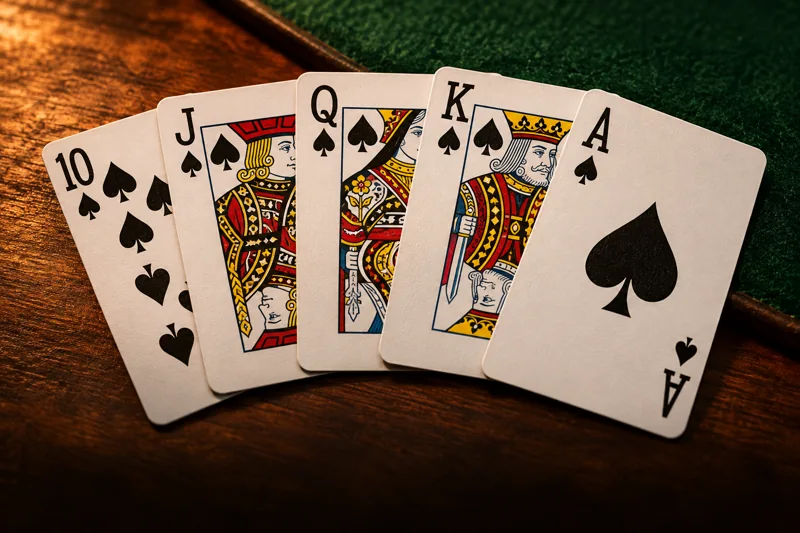
All poker hands in order, with examples

Learn the world’s most popular format
Omaha, Stud, Five Card Draw and more

Essential concepts for new players

What to expect, buy-ins, rake and etiquette
FEATURED GUIDE
Learn every poker hand, from High Card to Royal Flush, with clear examples and a printable chart.
View Hand RankingsYour first hand, without the pressure
Follow a fictional Hold’em hand. Choose a street to see what changes. No money, sign-up or download.
You receive two private cards. After the blinds, players choose whether to fold, call or raise. You are on the button; when the players before you fold, you raise.
Three shared cards arrive. With A♠ Q♠, you have a pair of queens and an ace kicker. The small blind acts before the button after the flop.
The fourth shared card gives you four spades across your hole cards and the board: a flush draw. You still have a pair, not a flush.
The final community card completes your ace-high flush: A♠ Q♠ 9♠ 4♠ 2♠. There are no more cards to come.
If two or more players remain after betting ends, compare the best five-card hands. Your ace-high flush beats a lower flush, but poker always requires reading the full board.
All 81 guides, organized around the questions you are asking.
Explore all nine learning areas.
THE ESSENTIALS
Poker is a family of card games in which players compete for a pot by making the strongest eligible hand or getting everyone else to fold. Start with Texas Hold’em: each player receives two private cards and shares five community cards. Your goal is the best five-card hand, not using every card you see.
Use a standard 52-card deck without jokers, chips, a dealer button and at least two players. Agree on the variant, chip values, stakes and stopping time before dealing. A play-money game is enough to learn every basic action. Never use money needed for essentials.
After the flop, action begins with the first active player left of the button. Heads-up, the button posts the small blind and acts first preflop, then last afterward. Move the button clockwise between hands.
Check when no unmatched bet faces you. Call to match a bet, raise to increase it, or fold to leave the hand. When nobody has bet on a street, you can open the betting. An all-in commits your remaining table chips; opponents cannot demand more money than you have in play.
A royal flush is strongest, followed by straight flush, four of a kind, full house, flush, straight, three of a kind, two pair, one pair and high card. Compare only five cards. Equal hands split the pot; suits do not break standard Hold’em ties. You also win when every opponent folds.
Learn the actions, then identify the best five cards, notice your position and choose starting hands with a plan. Try the walkthrough above and follow Rules → Hands → Hold’em → Position → Strategy. You do not need to master everything before a practice hand.
Continue with poker hand rankings or Texas Hold’em rules.
A quick confidence check
When can you check?
When no unmatched bet is facing you. Check passes the action without adding chips. Facing a bet, you must call, raise or fold.