

KEY TAKEAWAYS
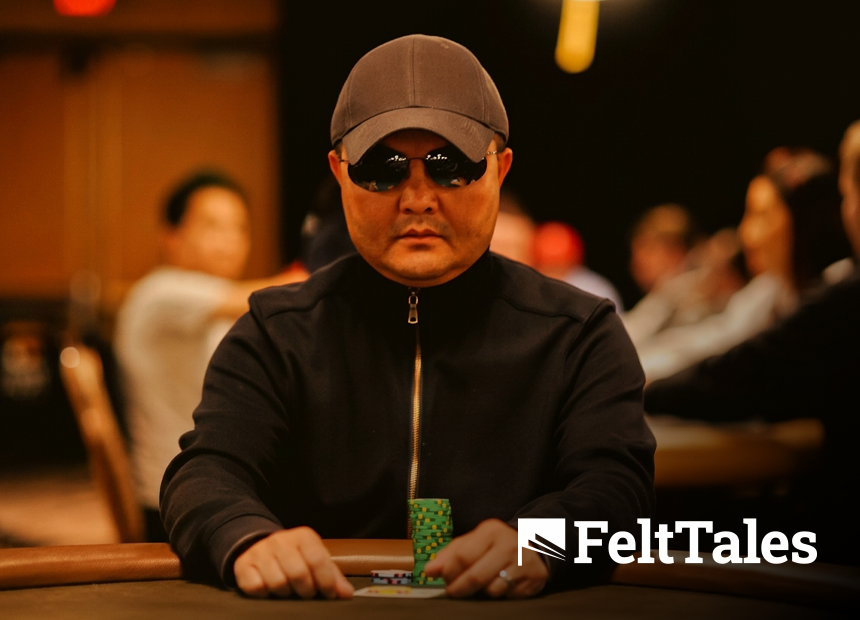
Shortly before 4 a.m. on July 18, 2007, a psychologist from Temecula, California, became the world champion of poker. Jerry Yang won the 2007 World Series of Poker Main Event at the Rio All-Suite Hotel & Casino in Las Vegas, beating a field of 6,358 entries and collecting $8.25 million, according to WSOP.com.
Yang had won his seat in a $225 satellite at Pechanga Resort & Casino and, as the Associated Press reported, had only started playing poker two years earlier. He began the final table eighth of nine in chips, took over the lead and knocked out seven of his eight opponents. The last hand needed help from the river.
This is the Jerry Yang poker story told from the record: where he came from, how the final table unfolded, the hand that ended it, what happened to him afterward, and why a $225 qualifier winning millions is the exception that proves how long the odds are.
Who Was Jerry Yang Before 2007?
Yang was born in Laos and is ethnically Hmong. The Associated Press described him as having grown up poor there. In a 2010 profile, The Sacramento Bee reported that his family spent four years in the Ban Vinai refugee camp in Thailand before arriving in the United States in October 1979. The family later moved to Fresno, California.
He went on to earn a master’s degree in health psychology, according to PokerNews, and the Bee reported that he spent eight years working with foster children in Temecula. WSOP.com described him at the time of his win as a 39-year-old psychologist and social worker. PokerNews’ final table biography noted that he was married with six children.
His poker experience was short. The Las Vegas Review-Journal reported that he had learned the game in American Indian casinos around Riverside County and that, before the 2007 World Series, he had never set foot in a Las Vegas casino’s poker room. His total investment in the Main Event was the $225 satellite buy-in at his local Pechanga casino, the Review-Journal added, and he received backing from Pechanga, the Lake Elsinore Casino and the FullTilt.net website.
The 2007 Main Event itself was huge. WSOP.com reported that the tournament was spread over four starting days from July 6 and generated a prize pool of nearly $60 million; PokerNews lists it at $59,784,954. Of the 6,358 entries, 621 finished in the money, each receiving at least $20,320.
The 2007 WSOP Main Event Final Table
From eighth in chips to the lead
The final table began at noon on July 17. PokerNews listed Yang in seat 4 with 8.45 million chips, near the bottom of the counts. He attacked immediately. Card Player reported that Yang won 30 of the first 80 hands, and the Review-Journal said he took the chip lead about two hours into play.
He knocked players out quickly. The AP described him calling Philip Hilm’s all-in with A-K to eliminate him in ninth, calling Lee Watkinson’s A-7 with A-9 for eighth, and beating Lee Childs’ K-J with J-8 for seventh. Only Jon Kalmar, in fifth, fell to someone other than Yang, losing to Raymond Rahme’s pocket jacks. Yang said afterward: “The only way I would win this tournament is to be aggressive from the very beginning and that’s exactly what I did.”
The long middle
The table then slowed. Card Player reported that after Kalmar’s exit, Alex Kravchenko, Rahme and Tuan Lam each doubled up through Yang, and that the final four played 107 hands over about seven and a half hours. Kravchenko went out in fourth around 1 a.m., and Rahme followed in third when Yang called his pocket kings with A-5 on a board containing an ace.
Heads-up against Tuan Lam
Lam, a Vietnamese-born professional from Mississauga, Ontario, was also a refugee who had built a new life in North America. The AP put the heads-up chip counts at 104.5 million for Yang and 23 million for Lam. Card Player reported that Lam doubled up once, with 4-3 against Yang’s A-9 after flopping a four, before the deciding hand.
The final hand
According to Card Player, Yang raised to 2.3 million and Lam moved all in. Yang called with pocket eights (8♣ 8♦, as PokerNews lists them), and Lam showed the ace and queen of diamonds. The flop came Q-9-5, giving Lam a pair of queens, and his supporters waved Canadian flags.
The turn was a 7, which gave Yang an open-ended straight draw: any six or any eight would win. The river was a 6, completing a nine-high straight. The Review-Journal counted it as the 205th hand of the final table, which Card Player described as a 16-hour session. Lam took home $4,840,981 for second and Rahme $3,048,025 for third. Lam told reporters: “I was patient and waited for the big hand, but the cards came out different.”
| Place | Player | Prize |
|---|---|---|
| 1st | Jerry Yang | $8,250,000 |
| 2nd | Tuan Lam | $4,840,981 |
| 3rd | Raymond Rahme | $3,048,025 |
| 4th | Alex Kravchenko | $1,852,721 |
| 5th | Jon Kalmar | $1,255,069 |
| 6th | Hevad “Rain” Khan | $956,243 |
| 7th | Lee Childs | $705,229 |
| 8th | Lee Watkinson | $585,699 |
| 9th | Philip Hilm | $525,934 |
The payouts above come from the official WSOP.com announcement. Seven of the nine finalists were eliminated by the eventual champion.
Why Yang’s Win Still Matters
Yang’s title came one year after Jamie Gold’s dominant 2006 run, and the AP drew the comparison directly, noting that Yang did it from the back of the pack rather than from the chip lead.
The final table also showed how international the Main Event had become. The AP reported that the finalists came from five nations, and that WSOP commissioner Jeffrey Pollack saw the table as evidence of the global reach of poker and its fans. Coverage by outlets such as the AP and the Las Vegas Review-Journal led with his background as a refugee turned psychologist turned world champion. His pledge, made before the final table, to give 10% of his winnings to charities including the Make-A-Wish Foundation, Feed the Children and the Ronald McDonald House added to that image.
The Other Side of the Story
For every satellite winner who goes deep, thousands do not. Of 6,358 entries in 2007, only 621 cashed, and the rest lost their buy-in or their satellite seat. Yang’s own path is the exception.
His post-win career was quieter than the headlines. PokerNews reported in 2017 that he had opened Pocket 8’s Sushi and Grill in Merced, California, and later a second restaurant in Las Vegas, which he closed while caring for his father, who later died. The same article referred to publicized financial troubles that seemed largely behind him by then, and Upswing Poker reported that he had dealt with the IRS. His biggest tournament cash after 2007, according to Upswing, was $75,000 for fifth in the 2010 National Heads-Up Championship.
Myths About Jerry Yang’s Win
Myth: he only won because of the last river card. The river decided the final hand, but Yang had already built a large lead by eliminating six players and winning dozens of pots earlier in the day.
Myth: his A-Q opponent was a big favorite. Before the flop, a pair of eights against ace-queen is close to a coin flip. Lam only took the lead when a queen hit the flop.
Myth: a $225 satellite is a reliable path to a title. It is an extreme long shot. Yang’s run is remembered precisely because it is so rare.
More Main Event Stories
Yang’s win followed Jamie Gold’s $12 million run at the 2006 WSOP Main Event and continued a pattern that began with Chris Moneymaker’s 2003 win and the poker boom and Greg Raymer’s 2004 title. To understand the route Yang took to his seat, read how WSOP satellite tournaments work, and for what a long Main Event day involves, see what a day at the WSOP Main Event is really like.
Frequently Asked Questions
Sources & References
- WSOP.com — California Resident Wins World Series of Poker Main Event
- CBS News (AP) — Psychologist Wins World Series Of Poker
- Card Player — Jerry Yang Wins the 2007 WSOP Main Event
- Las Vegas Review-Journal — $8.25 million answer to prayers
- PokerNews — Final Table Bios: Jerry Yang, 2007 World Series of Poker
- The Sacramento Bee via Modesto Bee — Hmong refugee, poker champ, restaurateur: Meet Jerry Yang
- PokerNews — Where Are They Now: Poker’s Good Guy, a Survivor, and a Rogue
- Upswing Poker — What Has Jerry Yang Been Up to Since His WSOP Win?