

KEY TAKEAWAYS
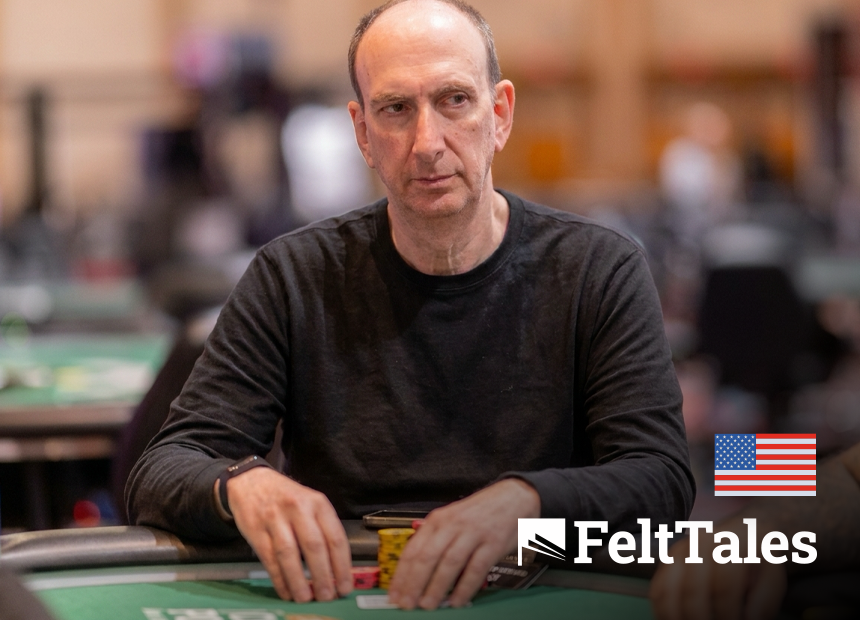
Erik Seidel sat down with Risky Business, the podcast hosted by Nate Silver and Maria Konnikova, for a wide-ranging conversation about his career and his approach to the game. In an episode published in July 2025 as part of the show’s World Series of Poker coverage, the Poker Hall of Famer talked about how he got into games at a New York backgammon club, why he left Wall Street, and how he handles pressure deep in big tournaments. The headline idea was his personal “no suffering” rule: if he wakes up tired, he simply doesn’t play. Seidel also explained why he thinks computers have been the biggest change in poker during his career, why he isn’t chasing bracelets, and why his 1988 Main Event loss to Johnny Chan, the hand later made famous by the film Rounders, is still one of his favorite tournaments. For a player who has stayed near the top of the game for almost four decades, it was a candid look at what has kept him going.
Where Seidel Said It
The conversation appeared on the YouTube channel of Risky Business with Nate Silver & Maria Konnikova, a weekly podcast about decision-making co-produced by iHeart Media and Pushkin Industries. The episode runs about 23 minutes and was published on July 28, 2025. The hosts said at the start that it was recorded in May, ahead of that summer’s World Series. The interview has a personal angle: according to the episode description, Seidel is the player who taught Konnikova to play poker while she was researching her book The Biggest Bluff, and both hosts are serious tournament players themselves.
Video: “No Suffering” at the Table: Erik Seidel on Poker Strategy & Enjoying the Game — Risky Business with Nate Silver & Maria Konnikova, published July 28, 2025.
From the Mayfair to Wall Street and Back
Asked how it all started, Seidel said he began with backgammon in high school, moved on to a club called the Game Room on Manhattan’s Upper West Side, and then to the Mayfair, a well-known backgammon and bridge club. A poker game eventually started there, and he recalled that professionals were not allowed in at first, which he called very helpful because he was a terrible player surrounded by other weak players. Over time, he said, poker slowly took over the Mayfair until it became a poker club.
That account matches what Seidel has told other outlets. A 2019 PokerNews profile describes the Mayfair as the club where Dan Harrington and Howard Lederer also played once professionals were let in, and it notes that Seidel traded on Wall Street before the October 1987 crash pushed him back toward poker.
On Risky Business, Seidel said moving from games to Wall Street felt like a natural step, and that while he worked there he was also flying to Las Vegas to play cash games. He said he disliked the trading floor: wearing a tie, fighting over tiny price differences, and an environment he described as ugly, where he felt you were rewarded for taking advantage of the person across from you. Poker, by contrast, struck him as competitive but never unfriendly. He noted that the Las Vegas games were open to anyone in those days, and said he still enjoys the environment and rooting for friends.
Pressure, Rest and the No Suffering Rule
Konnikova asked how he keeps making good decisions when the stakes rise and the cameras are on. Seidel said tournaments actually make that easier for him, because the further you go, the more is at stake, and the structure rewards you for paying attention and bringing focus. He admitted he sometimes has to remind himself to get back to being present and watching the action, but said it becomes more interesting as a final table gets closer.
He described the World Series as an all-consuming routine. For six or seven weeks, he said, it is playing, eating and sleeping, and planning dinners with visiting friends is always a mistake because if you’re not playing you’re in recovery. He praised Konnikova for taking a few days off during the series to reset.
That led to the line that gave the episode its title. “I also have a no suffering rule,” Seidel said. If he wakes up tired or dragging, he won’t play, because he doesn’t want to be unhappy at the table, and at an event with so many tournaments every day he believes you have to be conscious of what energy you can bring. Asked whether he is trying to collect bracelets the way Phil Hellmuth does, he said no: he doesn’t play as many events as the bracelet hunters, he feels he has enough bracelets, and winning one is a kind of mini miracle. Tournament poker is high-variance even for elite players: big scores are the exception, not something anyone can count on.
How Computers Changed the Game
Asked about turning points in his career, Seidel said the main one is computers coming into the game, which he said had changed everything over roughly the last eight years, though he wasn’t sure of the exact time frame. He joked that a friend teases him for saying the game has been too tough for 30 years, but said the computers really have made it a much greater challenge, harder for him to play but also more interesting. He said it is fun to play against the computer-trained players and to see how much the game has evolved. Fellow high roller Adrian Mateos covered similar ground in his own interview about GTO and solvers.
On preparation, Seidel said players used to just show up and play: almost nobody studied, and the books of the time weren’t very relevant. Today, he said, some opponents are completely immersed in studying and playing, which creates an extra challenge. He framed that as part of the appeal rather than a complaint. “I feel like I’m as much a fan as I am a player,” he said, describing how he sometimes sits down at a table and enjoys how good the other players are.
The results suggest he is still competitive. His tenth WSOP bracelet came in a $50,000 High Roller in 2023, worth $1,704,400, and at the 2026 World Series, after this interview was recorded, he reached heads-up play in the $3,000 Six-Handed Pot-Limit Omaha before finishing second to Joshua Wang for $271,371.
Erik Seidel vs. Johnny Chan, Reads and Reputation
The hosts brought up old footage from the 1988 World Series, where Seidel finished second to Johnny Chan in the Main Event. Seidel said back then he was very focused on reads and was pretty reckless, admitting he didn’t really know what he was doing. He said tells were more obvious in that era because players paid less attention to timing and patterns, and that when you don’t know what you’re doing, you can push things pretty far.
Asked whether losing that famous heads-up match still stings, Seidel said the opposite. He called 1988 one of his favorite tournaments ever, because he was at the very beginning of his career, had no confidence that his skills would hold up at the World Series, and spent four days discovering that he could compete. He said losing was not really a big deal: you win tournaments and you lose them. Seidel finished second for $280,000, and the final hand, in which Chan slow-played a flopped straight, later appeared in the 1998 film Rounders. Seidel told PokerNews in 2023 that he was taken aback by the scene at first but came around to it.
On what it is like to be a known name today, Seidel said he tries to play each opponent individually and doesn’t think reputation helps him much. If anything, he believes amateurs may be more likely to try to bluff him so they have a story to tell back home, especially on television, where nobody wants to be seen getting bluffed.
He ended with advice he first gave Konnikova years ago: pay attention. “I feel like people are teaching you how to beat them,” he said, explaining that opponents’ patterns are a big exploit for anyone watching closely. Asked about Konnikova as a student, he said what made her successful was that she worked hard, stayed open-minded and was willing to put in the work.
Key Moments From the Interview
Why It Matters
Seidel is one of the most decorated players in the game. He holds 10 WSOP bracelets, tied with Johnny Chan and Doyle Brunson and behind only Phil Hellmuth and Phil Ivey, was inducted into the Poker Hall of Fame in 2010, and has more than $49 million in live tournament earnings on The Hendon Mob as of November 2026. His career spans the pre-boom Mayfair era, the televised boom and today’s high roller scene.
That is why his comments carry weight. Seidel did not present the computer age as a threat but as a reason the game stays interesting, and his “no suffering” rule offers a simple answer to a question many grinders face during a long series: when is it better not to play? His relaxed view of the 1988 loss also adds a personal footnote to one of poker’s most replayed hands, showing how the player on the losing side still remembers it as a highlight of his career.
Frequently Asked Questions
Sources & References
- Risky Business with Nate Silver & Maria Konnikova — “No Suffering” at the Table: Erik Seidel on Poker Strategy & Enjoying the Game (YouTube, July 28, 2025)
- WSOP.com — Erik Seidel Player Profile
- Card Player — Hardware Haul: How The 2026 WSOP Impacted The Bracelet Race
- The Hendon Mob — Erik Seidel
- PokerNews — Before the Game: Erik Seidel the Trader (Part One)
- PokerNews — Rounders 25th Anniversary: Erik Seidel Says Film Accurately Portrayed NYC Underground