

KEY TAKEAWAYS
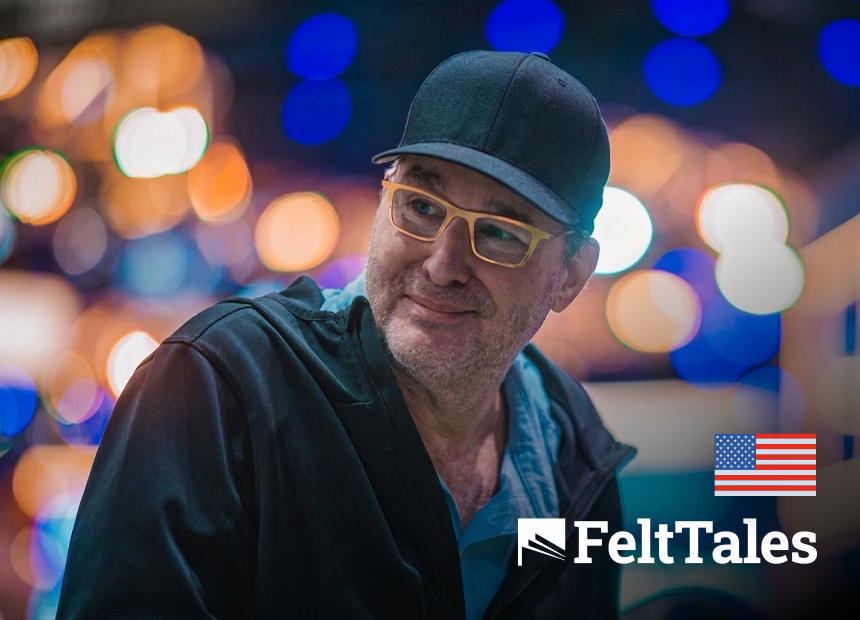
Phil Hellmuth has spent more than three decades as poker’s most recognizable winner and its most famous temper. In a long conversation published on February 25, 2026, by SmarterUmedia, the business-focused show hosted by World Poker Tour founder Steve Lipscomb, the all-time WSOP bracelet leader talked less about hands and more about what poker has given him away from the table: a network of founders and investors, a second career as an advisor, and a running battle with his own ego. Hellmuth opened by crediting the launch of the WPT with much of the opportunity that followed for him, then moved through his private Silicon Valley game, his view that praise is destructive, the real story behind the Poker Brat nickname, and the luck he believes shapes both poker and business. For fans who know Hellmuth mainly from his televised blowups, it is one of the more reflective interviews he has given in recent years.
Where Hellmuth Said It
The interview ran on SmarterUmedia, a show built around entrepreneurship rather than poker strategy. Its host, Steve Lipscomb, created the World Poker Tour, and the two men share a history that goes back to the early televised years of the tour. The episode runs about 65 minutes and follows the show’s format: a short opening lesson from the guest, followed by a long, loose conversation. Hellmuth used his opening segment to restate the idea behind his book #Positivity, that people are always in the right place at the right time and only need to take the first step. Much of the rest of the talk centers on his life as an investor and advisor, with poker as the thread that ties it together.
https://www.youtube.com/watch?v=SB7Qi7vlbgo
Video: They Call Me The Billionaire Whisperer — SmarterUmedia, published February 25, 2026.
Poker as a Super Connector
Hellmuth’s central argument was that poker is one of the best networking tools in the world. He told Lipscomb he once believed the top ten poker players could all become billionaires if they applied their skills to business, and that he began moving into business himself after 1999 because he wanted to spend more time at home. According to Hellmuth, things only started to click around 2015, and he now says he has advised 36 companies.
He traced much of that network back to a private game in Silicon Valley. Hellmuth described a group assembled by his friend Chamath Palihapitiya, the venture capitalist who has long hosted one of the best-known high-stakes home games in the Valley, as Card Player reported in 2015. Hellmuth’s explanation for why the game creates real bonds was simple: at a table with meaningful stakes, there is no pretending, and players see each other at their best and their worst. He also admitted to some impostor syndrome among such successful people, while noting that others in the group seemed to feel it too.
The role he described for himself with founders is more cheerleader than strategist. Hellmuth said that when he asked founders what he had done for them most, the answer was encouragement, and that one founder told him he would never know how much he had helped, which Hellmuth put down to the supportive tweets he kept sending. He was quick to add that he had to stop himself from taking that kind of compliment too seriously.
Why Praise Is Dangerous, in Hellmuth’s View
For a player whose public image is built on bravado, Hellmuth spent a surprising share of the interview on humility. He apologized to the audience several times for sounding cocky, and he told a story about joking with Michael Jordan about championships as an example of how successful people deflect praise rather than absorb it. His conclusion: “you learn as you get older that praise is very destructive.”
He laid out the tools he uses when he feels his ego growing. Hellmuth said that recording the audio version of his 2017 autobiography, Poker Brat, brought him down to earth by reminding him of a lonely, broke childhood. He described an earlier stretch in which, by his own account, meeting famous people left him distracted for weeks during a World Series. And he said that when he catches himself asking whether he is bragging too much, the answer is usually yes.
His most concrete advice was a written list of blessings. Hellmuth said he ranks health first, his wife and children second and his 17 world championships third, and warned that putting the titles at the top turns life into an endless chase. “If you get that out of order, your life’s not as fulfilling,” he said.
Phil Hellmuth on the Poker Brat Label
Hellmuth embraced the nickname and insisted the behavior behind it was never staged. He described the Poker Brat as a player who could not handle the lows of a game with luck in it and who felt he deserved results he did not get. He said television producers, Lipscomb included, wanted the genuine blowup, but that he never had to lean into it. “I am authentic and I’m genuine. I always act the same,” he said, adding that of the roughly 400 blowups he estimates he has had, only one was even partly performed.
He also said the villain role cost him more than he expected. According to Hellmuth, he assumed the public would quickly see past the bad-guy image to the person behind it, but it took until 2024 before much of the poker world accepted him as a good guy. He pointed to the World Series that followed the death of Doyle Brunson in May 2023, when he said 28 people approached him on the first day to tell him they loved him.
On Daniel Negreanu, his tone was warm. Hellmuth said Negreanu has always loved him and has criticized the way he plays rather than him personally, and that his answer to that criticism has always been to win more bracelets.
Luck, Foxwoods and the Polymarket Miss
Lipscomb steered the conversation toward luck, and Hellmuth answered with two painful examples. The first was the World Poker Tour’s World Poker Finals at Foxwoods in November 2003, where The Hendon Mob records show Hoyt Corkins winning $1,089,200 and Hellmuth finishing third for $281,700. Hellmuth recalled a bad beat Corkins put on him and said Lipscomb had told the players before the final table that no deals were allowed, which meant no prize-pool chop to soften the variance at the end.
The second example came from business. Hellmuth said a 20-year-old Shayne Coplan stayed at his house while looking for his next project, and that he had a sheet of paper ready to invest $30,000 for 5% of the company. He never sent the money. Coplan went on to found Polymarket in 2020, and Hellmuth estimated that stake would be worth around $800 million today. He used the story to argue that luck and timing are part of every success, even for people who make good decisions.
The interview closed on politics, where Hellmuth kept his message general. He described himself as in the middle politically and urged listeners to step outside their echo chambers and look at both sides of an issue before posting about it.
Key Moments From the Interview
Why It Matters
The interview shows how Hellmuth now frames his own career. On the felt, the record is clear: according to his WSOP.com profile, he won his first bracelet in the 1989 Main Event, defeating Johnny Chan heads-up, and he leads the all-time list with 17. His 17th came in the 2023 $10,000 Super Turbo Bounty. Months after this interview aired, he came within one spot of an 18th, finishing runner-up to Darren Rabinowitz in the $5,000 8-Handed No-Limit Hold’em event at the 2026 WSOP for $464,286, as Card Player reported. A fuller look at those results is in the FeltTales Phil Hellmuth career profile.
What the SmarterUmedia conversation adds is the off-table story. Hellmuth presents poker as the entry point to a network, not just a source of income, and he is candid that luck shaped some of his biggest outcomes in both worlds. That framing matters for younger players who see the money without the variance: big scores are rare, swings are real, and poker is not a dependable living for most people who try it. His account of the reception he got at the World Series after the passing of Doyle Brunson shows, in his own telling, how far his public image has moved since the early Poker Brat years.
Frequently Asked Questions
Sources & References
- SmarterUmedia — They Call Me The Billionaire Whisperer – Poker Phenom and Entrepreneur Phil Hellmuth (YouTube, February 25, 2026)
- SmarterUmedia — Host Steve Lipscomb, Founder of the World Poker Tour
- WSOP.com — Phil Hellmuth player profile
- PokerOrg — The legend grows: Phil Hellmuth wins his 17th World Series of Poker bracelet
- Card Player — Darren Rabinowitz Denies Phil Hellmuth Bracelet No. 18
- The Hendon Mob — 2003 World Poker Finals, No Limit Hold’em WPT Event
- Card Player — Chamath Palihapitiya: Meet The Venture Capitalist Who Runs The Biggest Home Game In Silicon Valley
- France 24 — Betting on catastrophe: the dizzying rise of prediction markets
- Reuters — ‘The Godfather of Poker’ Doyle Brunson dies at 89
- PokerListings — Phil Hellmuth Promises “Honest” Look at UltimateBet in Book