


KEY TAKEAWAYS
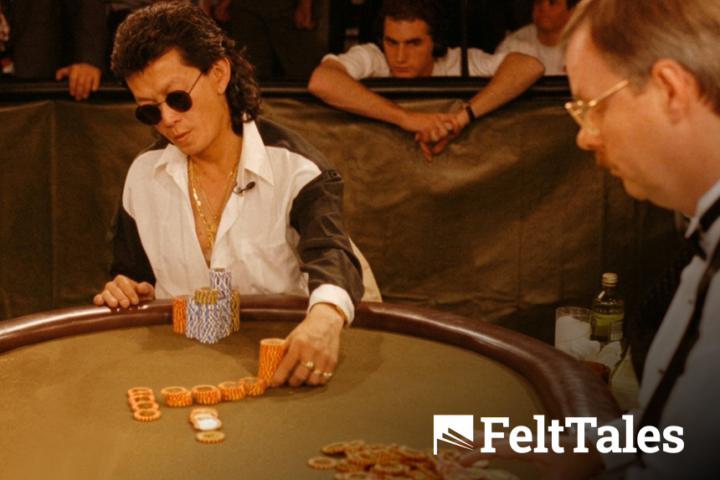
The last hand of the 2009 World Series of Poker Main Event took only a few seconds to play and settled a contest that had begun four months earlier with 6,494 players. In the early hours of November 10, 2009, at the Rio in Las Vegas, Joe Cada’s pocket nines held against Darvin Moon’s queen-jack of diamonds, and a 21-year-old online pro from Shelby Township, Michigan, became world champion. He won $8,547,042, according to the WSOP’s official report, and Moon, a self-employed logger from western Maryland, took $5,182,928 for second.
The hand itself was not complicated. Both players were all in before the flop, the five community cards missed Moon, and Cada’s pair stood up. What made it memorable was everything around it: the youngest champion in the event’s history, an amateur who had qualified through a $130 satellite, a heads-up match in which the lead changed hands repeatedly, and one earlier hand that Moon later called his biggest mistake. This article retells the Joe Cada vs Darvin Moon final hand street by street, explains the hand that set it up, and notes where the contemporary reports disagree.
The 2009 Main Event and the November Nine
The 2009 Main Event was the second played under the November Nine format. According to the WSOP’s own history page, from 2008 to 2016 the tournament played down to nine players during the summer series and then paused, holding the final table months later so ESPN could build its broadcasts toward a finish nobody yet knew. ABC News, reviewing the concept in 2018, reported that ESPN ratings rose by almost 50 percent in its first year and by another 16 percent in 2009.
The 2009 final nine were Darvin Moon, Eric Buchman, Steven Begleiter, Joe Cada, Jeff Shulman, Phil Ivey, Kevin Schaffel, Antoine Saout and James Akenhead, as listed in the Las Vegas Sun’s live blog. Card Player reported that when play stopped for the four-month break, Moon held nearly 59 million chips, more than 24 million ahead of anyone else. PokerNews later traced much of that lead to a hand with 11 players left in which Billy Kopp got his chips in drawing dead, flush under flush.
The final table resumed on Saturday, November 7, and lasted a record 17 hours, according to the Las Vegas Sun. Phil Ivey finished seventh after his ace-king failed to hold against Moon’s ace-queen, as PokerNews recalled. Cada, a heads-up specialist who told Casino City he had played that format online for three years, reached the last two with a commanding stack. When heads-up play began on Monday, November 9, Cada led 135,950,000 chips to Moon’s 58,850,000, per Casino City Times, with blinds starting at 500,000 and 1 million, according to the Las Vegas Sun.
Joe Cada vs Darvin Moon: The Heads-Up Match
Moon won the very first hand of the night. According to the Las Vegas Sun, his pocket queens beat Cada’s pocket nines on a board of 3♠ K♠ 2♦ A♦ K♣ after Moon bet 10 million on both the turn and the river. That one pot cut Cada’s chip advantage nearly in half, Casino City Times reported, and it set the tone for a match in which the amateur kept raising.
Moon takes control
For much of the next two hours Moon pressed. In one pot reported by the Las Vegas Sun, Cada bet 13 million after an ace-high flop, Moon raised by 30 million and Cada folded. The WSOP’s report said that at his peak Moon held 149 million chips to Cada’s 49 million. Moon explained the approach afterward in the WSOP report: “Well you got to take the man’s game away from him.”
The hand that turned it: J-9 against 8-7
With about 54 million chips left, Cada made his stand. On a board of 10♣ 5♦ 9♥ 10♦, Cada bet 3 million and Moon moved all in, the WSOP report said; Casino City Times described the move as a check-raise. Cada called after a couple of minutes with J♥ 9♦, a pair of nines on a paired board, and Moon showed 8♠ 7♠ for an open-ended straight draw. Any six or jack would have won Moon the title, the Las Vegas Sun noted. The river was the 3♥.
The pot pushed Cada back in front, 108 million to 86.5 million, according to Casino City Times. Moon was blunt about it in the WSOP’s report: “That’s the hand I messed up. I should have raised on the flop where he had middle pair.”
The final hand, street by street
Preflop. Eight hands later, Casino City Times reported, Cada moved all in over a Moon raise and Moon called. Cada showed pocket nines, listed by PokerNews as 9♣ 9♦, and Moon showed Q♦ J♦. It was close to a coin flip, with Cada’s pair slightly ahead of two higher cards. Casino City Times described Cada racing over to his supporters and burying his head in the shoulder of his backer, Cliff Josephy, unable to watch the cards come out.
Flop: 8♣ 2♣ 7♠. No queen, no jack, no diamonds. The flop gave Moon nothing beyond a backdoor straight possibility with a ten and nine still needed, and it left Cada’s nines as the best hand.
Turn: K♥. The Las Vegas Sun wrote that the turn briefly scared Cada’s side because it was a face card. It was a king, not the queen or jack Moon needed, leaving Moon one card from elimination.
River: 7♣. The second seven paired the board and gave Cada two pair, nines and sevens. Moon’s queen-high was finished, and Cada was the 2009 World Series of Poker Main Event champion. Moon walked over to shake his hand. According to the WSOP report, Commissioner Jeffrey Pollack presented the bracelet, and a tearful Cada told the crowd, “I’ve dreamed of winning this tournament, and to do it the first year out of the gate is unbelievable.”
Why the Final Hand Still Matters
The result rewrote a record. Casino City Times noted that Peter Eastgate had become the youngest Main Event champion at 22 in 2008; Cada broke that mark at 21, about a week before his 22nd birthday, according to the WSOP’s report. PokerNews later put his age at 21 years and 11 months. Casino City Times described Cada as an internet heads-up specialist, and his win came only one year after he would have been too young to play the event at all, as the Las Vegas Sun pointed out.
The match also showed the November Nine working as designed. The four-month wait gave ESPN two finalists who offered a clean contrast between a young online professional and a working amateur. ABC News reported that viewership in 2009 was 69 percent higher than in 2007, the last year before the delayed final table.
Cada’s career later gave the hand a second life. He won three more bracelets, including the $10,000 Six-Handed Championship in 2014 and two events in 2018, and finished fifth in the 2018 Main Event for $2,150,000. PokerNews noted that the 2018 run made him the first former champion to reach the final table since Dan Harrington in 2003 and 2004.
Backers, Variance and the Runner-Up’s Road
The $8.5 million headline was not all Cada’s. Casino City Times reported that Cada would keep 50 percent of his winnings, with the rest going to Cliff “Johnny Bax” Josephy and Eric “Sheets” Haber, who had bought him into the tournament. Arrangements like this mean a champion’s official prize and his personal take-home figure can be very different numbers.
Moon’s path was the long shot of all long shots. Card Player and Ante Up reported that he turned a $30 local tournament win into a $130 satellite at Wheeling Island Casino, then nearly took the $10,000 in cash for his struggling logging business before his brother urged him to play. Moon was one of 6,494 entrants that year, and almost all of them, satellite winners included, left with far less than he did or with nothing at all.
Moon refused sponsorship deals during his run, telling Card Player he did not want to be tied to anyone. He went back to logging and played little afterward; the Las Vegas Review-Journal recorded only one other WSOP cash, $3,046 in a 2012 Circuit event. Moon died on September 19, 2020, at 56, following complications from surgery, as reported by PokerNews and Card Player.
Common Myths About Cada vs Moon
Myth: Moon had never played poker before 2009. He was new to big tournaments, not to cards. Ante Up reported that his grandfather taught him the game at age eight, and Card Player wrote that he had played hold’em for about three years in charity tournaments at local fire halls before winning his seat.
Myth: Moon qualified online. He did not. NPR reported that he had never played online, and his seat came from a live satellite in Wheeling, West Virginia.
Myth: The final hand was a bad beat. Cada’s nines were ahead before the flop, and neither player improved until the river paired the board. It was a coin flip that the favorite won, not a suckout.
Myth: The reports all agree on the action. They do not. Casino City Times wrote that Cada re-raised all in and Moon called, while the Review-Journal wrote that Cada called Moon’s all-in. The Review-Journal also called it the night’s 87th hand, while MLive reported 88 hands of heads-up play.
Related Stories
Cada’s nines join a line of Main Event endings retold on FeltTales, from Chris Ferguson’s river nine against T.J. Cloutier in 2000 to the bluff that sparked the poker boom. Moon’s $130 start is part of a longer tradition explained in how WSOP satellite tournaments work, and Phil Ivey, who finished seventh that year, is profiled in his career and legacy.
Frequently Asked Questions
Sources & References
- WSOP.com — Joe Cada Captures WSOP Title
- Casino City Times — Youth is served: Joe Cada wins the World Series of Poker Main Event
- Las Vegas Sun — Live Main Event blog from the Rio
- Las Vegas Review-Journal — Cada wins World Series of Poker championship
- PokerNews — 2009 WSOP Main Event: The Final Table
- Card Player — WSOP November Nine Profile: Darvin Moon
- Ante Up Magazine — Cover Story: Darvin Moon
- NPR — At Poker World Series, Unlikely Player Poised To Win
- PokerNews — 2009 November Niner Darvin Moon Dead at 56
- Card Player — World Series of Poker Main Event Runner-Up Darvin Moon Passes Away At 56
- Las Vegas Review-Journal — Darvin Moon, WSOP Main Event runner-up, dies at 56
- Card Player — Darvin Moon Signed By Heartland Poker Tour
- PokerNews — Top 10 Stories of 2018, #4: Joe Cada’s Amazing WSOP
- PokerNews — Joe Cada player profile
- MLive — Shelby Township’s Joe Cada wins World Series of Poker main event
- WSOP.com — WSOP History
- ABC News — The WSOP legacy of the November Nine
- ESPN — Who has won World Series of Poker main event? List by year